

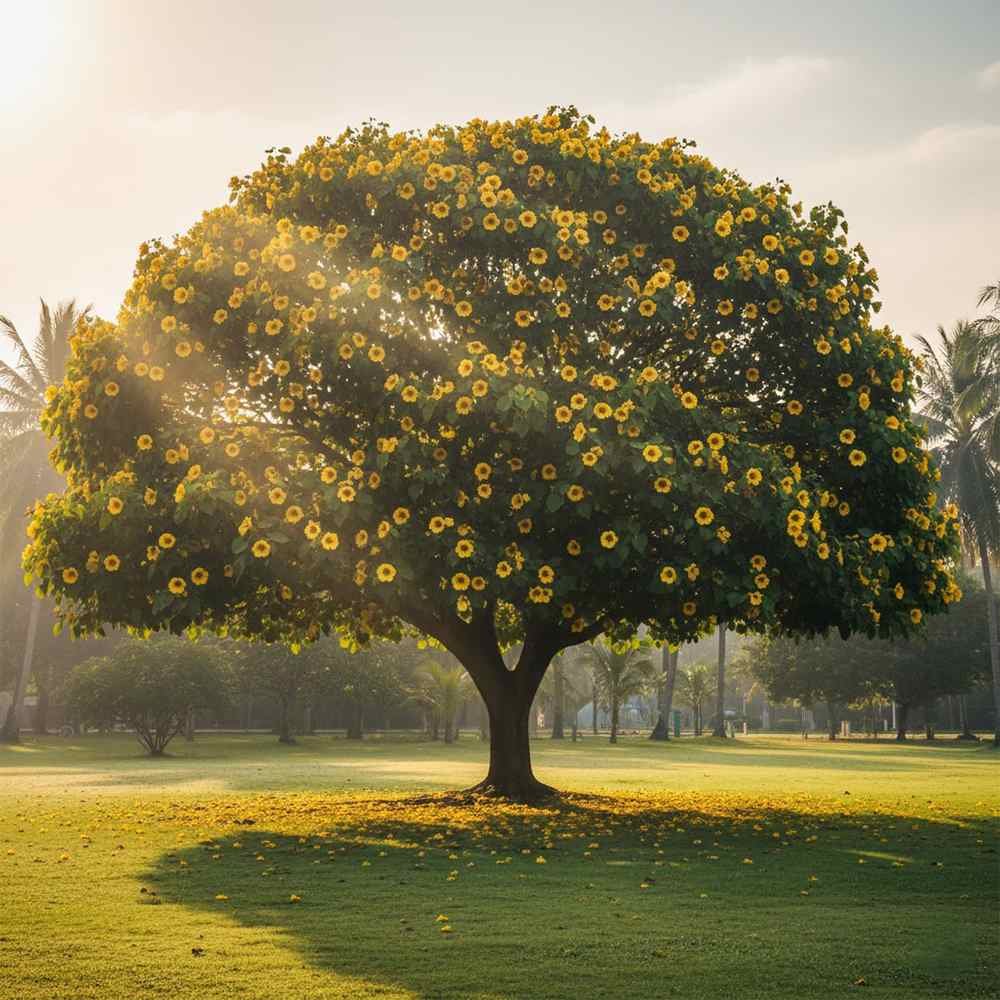
Indian Tulip Plant
Flowering
View & Listen Plant Education

Indian Tulip Plant - Video Guide
Watch Video
All Details
I am the Indian Tulip Tree, the towering golden sentinel of tropical skies. My grand, umbrella-shaped canopy of broad, glossy leaves and spectacular cup-shaped golden-orange flowers with maroon hearts make me a majestic landmark in parks, avenues, and sacred groves.
I am a large, fast-growing evergreen tree, celebrated for its impressive height, symmetrical canopy, and vibrant, tulip-like blooms that create a stunning visual impact.
Native to tropical Asia, from India to Malaysia and the Philippines; widely planted as an ornamental and shade tree across the tropics.
Water deeply and regularly when young. Mature trees are drought-tolerant but benefit from occasional deep watering in extreme dry spells.
Requires full sun for optimal growth and prolific flowering.
Thrives in 20-35°C; sensitive to frost and prolonged cold.
Plant in deep, fertile, well-drained soil with ample space for root and canopy spread (at least 8-10 meters from structures).
Young trees benefit from annual compost or balanced fertilizer; mature trees rarely need feeding.
Botanical name: Thespesia populnea (often confused with Hibiscus tiliaceus – Sea Hibiscus); Common names: Portia Tree, Pacific Rosewood; Family: Malvaceae.
Generally considered non-toxic to pets, but supervision is always wise.
High; as a large tree, I excel at carbon sequestration, providing shade, cooling, and improving air quality.
Provides excellent shade and wind protection; wood is used in carpentry; flowers and bark have traditional medicinal uses; a superb avenue or specimen tree.
Can be susceptible to pests like scale insects; root system may be invasive near pavements or plumbing; leaf litter can be substantial.
Long-lived; can survive 50-100+ years, growing 15-25 meters tall with a broad, spreading crown.
Everyday 8:30AM to 6:30PM

Akola, Road, Badnera, Amravati, Maharashtra 444701