
Cherry Plant
Fruit
View & Listen Plant Education
Cherry Plant - Video Guide
Watch Video
All Details
Hello! I am the Cherry Tree, a beloved symbol of ephemeral beauty, renewal, and agricultural sweetness. My arrival is marked by a stunning, cloud-like explosion of pink or white blossoms in spring, followed by my succulent, richly flavored fruit. I am a graceful, temperate-zone classic, here to root both exquisite beauty and delicious nourishment in your landscape.
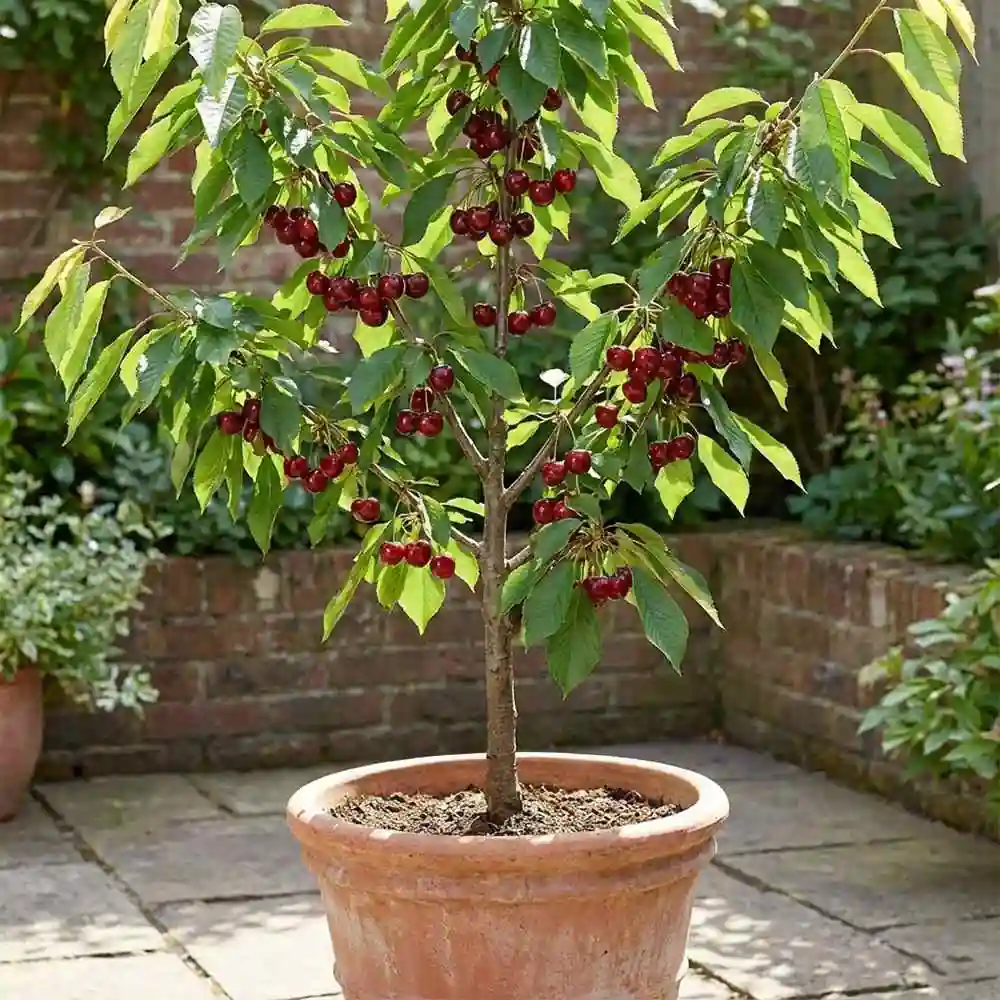
I am a medium-sized, fast-growing, deciduous tree known for my striking, horizontal branching structure, smooth bark, and spectacular seasonal display.
Foliage: My leaves are simple, oval, serrated along the edges, and generally bright green, turning vibrant shades of red, orange, and yellow in the autumn.
Flowers (Cherries): My flowers are my most celebrated feature: beautiful, five-petaled, often fragrant blossoms ranging from pure white to deep pink, which appear in clusters before the leaves emerge.
Fruit: Edible varieties produce small, round, fleshy fruits called drupes, which are either Sweet Cherries (P. avium) or Sour/Tart Cherries (P. cerasus). Each fruit contains a single hard pit.
Bark: My bark is often smooth and reddish-brown, developing distinctive horizontal lenticels (cork marks) as I age.
I am native to the Northern Hemisphere, with ancestral origins across Europe, Western Asia, and East Asia (especially Japan and China).
I require consistent moisture, especially when young and during the critical fruit development stage, but I absolutely cannot tolerate standing water.
Routine: Water me deeply and regularly, ensuring the soil remains moist but never soggy.
Tolerance: Once established, I am somewhat drought-tolerant but will produce sparse, poor-quality fruit if water-stressed during summer. Excellent drainage is vital for my health.
I am a tree of open spaces and require generous light for both flowering and fruiting.
Preference: I need full sun exposure (at least 6-8 hours of direct light daily) for the best yield of blossoms and fruit, and to promote strong, sturdy growth.
Caution: Insufficient light will lead to sparse flowering, poor fruit set, and weak, lanky branches.
I am a temperate tree and require specific cold periods to thrive.
Dormancy/Chill: I require a specific number of chill hours (temperatures between 0°C and 7°C / 32°F and 45°F) during winter dormancy to properly set my buds for spring flowering and fruiting.
Growing Season: I thrive in average spring and summer temperatures between 15°C and 25°C (59°F and 77°F). I am highly frost-hardy during dormancy but am severely vulnerable to late spring frosts that can kill my open blossoms and ruin the year's fruit crop.
I am typically planted as a bare-root sapling in the late winter or early spring.
Space Requirement: Depending on the rootstock, I can grow 20 to 40 feet tall with a wide spread, requiring ample space. Dwarf varieties are available for smaller gardens.
Soil: I prefer deep, well-drained, fertile, loamy soil with a neutral pH (6.0 to 7.0). Poor drainage is my greatest structural weakness, leading to root problems.
I benefit from moderate fertilization to support heavy flowering and fruiting.
Routine: Apply a balanced fertilizer (e.g., 10-10-10 NPK) in the early spring before bud break. Avoid high-nitrogen fertilizers after spring, as they can lead to excessive leaf growth at the expense of fruit/flower production.
Note: Compost or well-rotted manure applied around the base is highly beneficial.
Scientific Name: Prunus spp. (e.g., P. avium - Sweet, P. cerasus - Tart, P. serrulata - Japanese Ornamental)
Common Names: Cherry, Flowering Cherry, Sweet Cherry, Tart Cherry, Sakura (Japanese)
Plant Family: Rosaceae (Rose family)
Plant Type: Deciduous Fruit or Ornamental Tree
The Cherry tree is considered TOXIC due to the presence of Cyanogenic Glycosides (Prunasin) in the leaves, stems, bark, and especially the inner pit/seed of the fruit. When these parts are chewed or crushed, they release highly poisonous Cyanide, which can cause severe illness or death if ingested by pets; therefore, while the fruit flesh is safe, ensure pets do not consume the pits or wilted foliage.
As a medium-sized deciduous tree with a dense canopy, I am highly effective at sequestering Carbon Dioxide during the growing season. My deep roots also help prevent soil erosion, and my extensive blossoms support insect biodiversity.
High Ornamental Value: Provides spectacular, often fragrant spring flower displays and brilliant fall color.
Edible Yield: Produces delicious, high-value fruit (in fruiting varieties).
Wildlife Support: My flowers support early pollinators, and my fruit feeds birds and small mammals.
Fungal Diseases: Highly susceptible to Brown Rot (attacking flowers and fruit), Leaf Spot, and Black Knot.
Pests: Vulnerable to Cherry Fruit Flies and Aphids.
Vulnerability: Late spring frost is the biggest threat to the year's flower and fruit crop.
I am a relatively moderately long-lived fruit tree, typically living for 30 to 50 years under ideal orchard conditions, though ornamental varieties can often live longer, reaching up to 100 years.
Everyday 8:30AM to 6:30PM

Akola, Road, Badnera, Amravati, Maharashtra 444701