

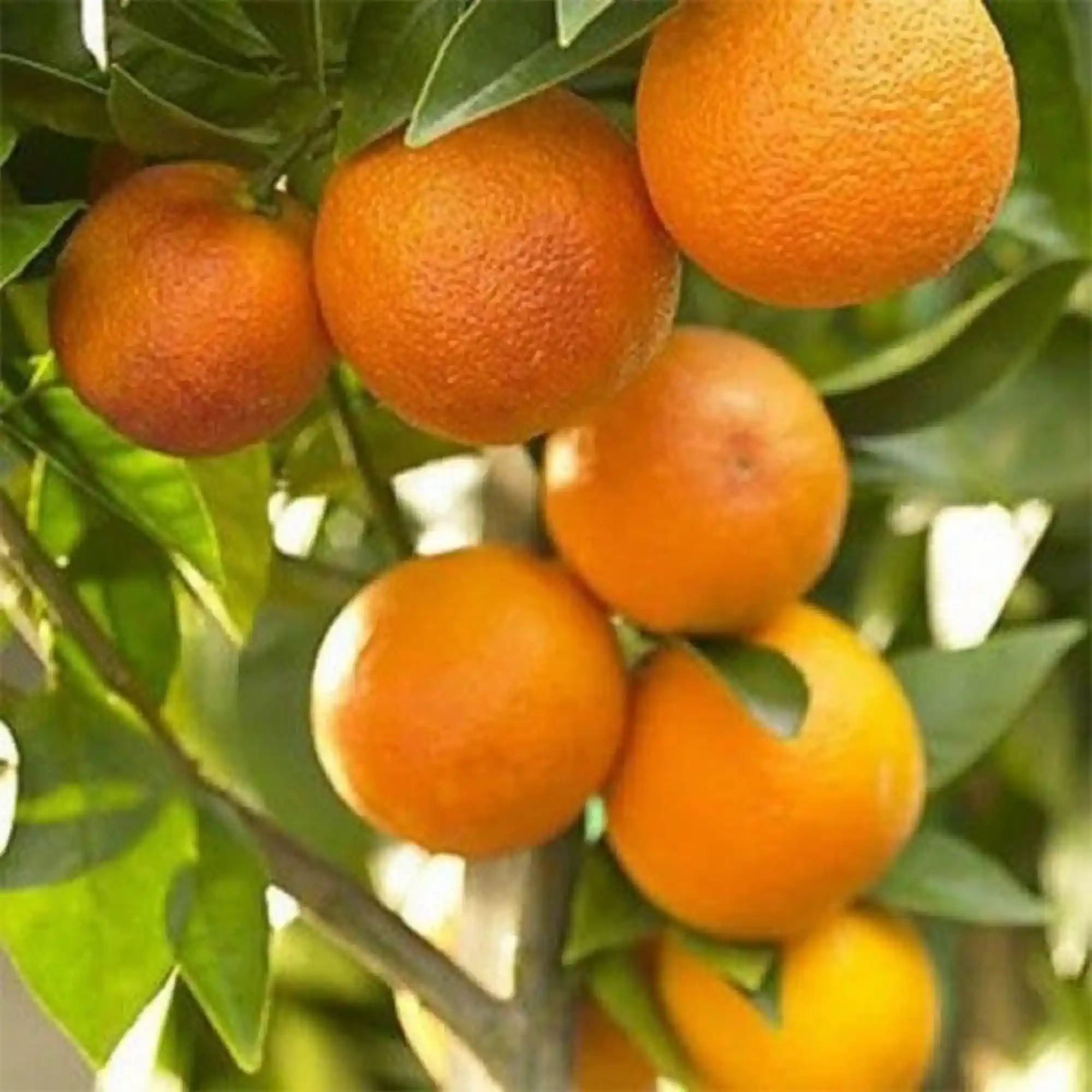
Orange Nagpuri
Fruit
View & Listen Plant Education

Orange Nagpuri - Video Guide
Watch Video
All Details
I am a vibrant and juicy citrus tree known for my round, bright orange fruits with a sweet-tart flavor and fragrant blossoms. Named after the Nagpur region in India, I am celebrated for my high-quality, seedless or low-seed oranges that are rich in vitamin C and widely enjoyed fresh, juiced, or used in culinary preparations. My glossy green leaves and fragrant white flowers add ornamental appeal to gardens and orchards.
I am a vibrant and juicy citrus tree known for my round, bright orange fruits with a sweet-tart flavor and fragrant blossoms. Named after the Nagpur region in India, I am celebrated for my high-quality, seedless or low-seed oranges that are rich in vitamin C and widely enjoyed fresh, juiced, or used in culinary preparations. My glossy green leaves and fragrant white flowers add ornamental appeal to gardens and orchards.
Originating in Nagpur, Maharashtra, India, I am a renowned variety of mandarin or sweet orange (Citrus reticulata or Citrus sinensis). I thrive in the subtropical climate of central India and have become a symbol of the region’s agricultural pride.
I need regular, deep watering, especially during flowering and fruiting stages. Allow the topsoil to dry slightly between waterings to prevent root rot. Reduce watering in winter. Consistent moisture is key for juicy fruits.
I thrive in full sun, requiring at least 6–8 hours of direct sunlight daily for optimal growth, flowering, and fruiting. Insufficient light can lead to poor fruit development and leaf drop.
I flourish in warm subtropical climates with temperatures between 15°C to 35°C. I can tolerate brief cold spells but are sensitive to frost, which can damage fruits and young branches.
Plant me in well-draining, slightly acidic to neutral loamy soil enriched with compost. Space trees 4–6 meters apart to allow for canopy growth. Grafting is commonly used to propagate true-to-type varieties.
Feed me with a balanced citrus fertilizer or well-decomposed compost in spring and late summer. Additional micronutrients like iron and zinc may be needed in alkaline soils to prevent yellowing leaves.
Botanical name: Citrus reticulata 'Nagpur' or Citrus sinensis 'Nagpur'. Family: Rutaceae. I am commonly known as Nagpur Orange or Nagpur Santra, prized for my thin skin, easy-to-peel segments, and rich flavor.
The fruit is safe for pets in moderation, but citrus leaves, peels, and seeds contain essential oils and compounds that can cause stomach upset in cats and dogs if ingested in large amounts.
Moderate. Like many trees, I contribute to cleaner air by absorbing carbon dioxide and releasing oxygen. My leaves can also trap dust when grown outdoors.
I produce delicious, nutritious fruits high in vitamin C and antioxidants. I am economically important in India, support local livelihoods, and add aesthetic and aromatic value to gardens.
Susceptible to citrus canker, greening disease, aphids, scale insects, and fruit flies. Nutrient deficiencies (like yellowing leaves) and root rot from poor drainage are also common issues.
I can live and produce fruit for 30–50 years or more with proper care, pruning, and disease management. Grafted trees may start fruiting within 3–4 years of planting.
Everyday 8:30AM to 6:30PM

Akola, Road, Badnera, Amravati, Maharashtra 444701