

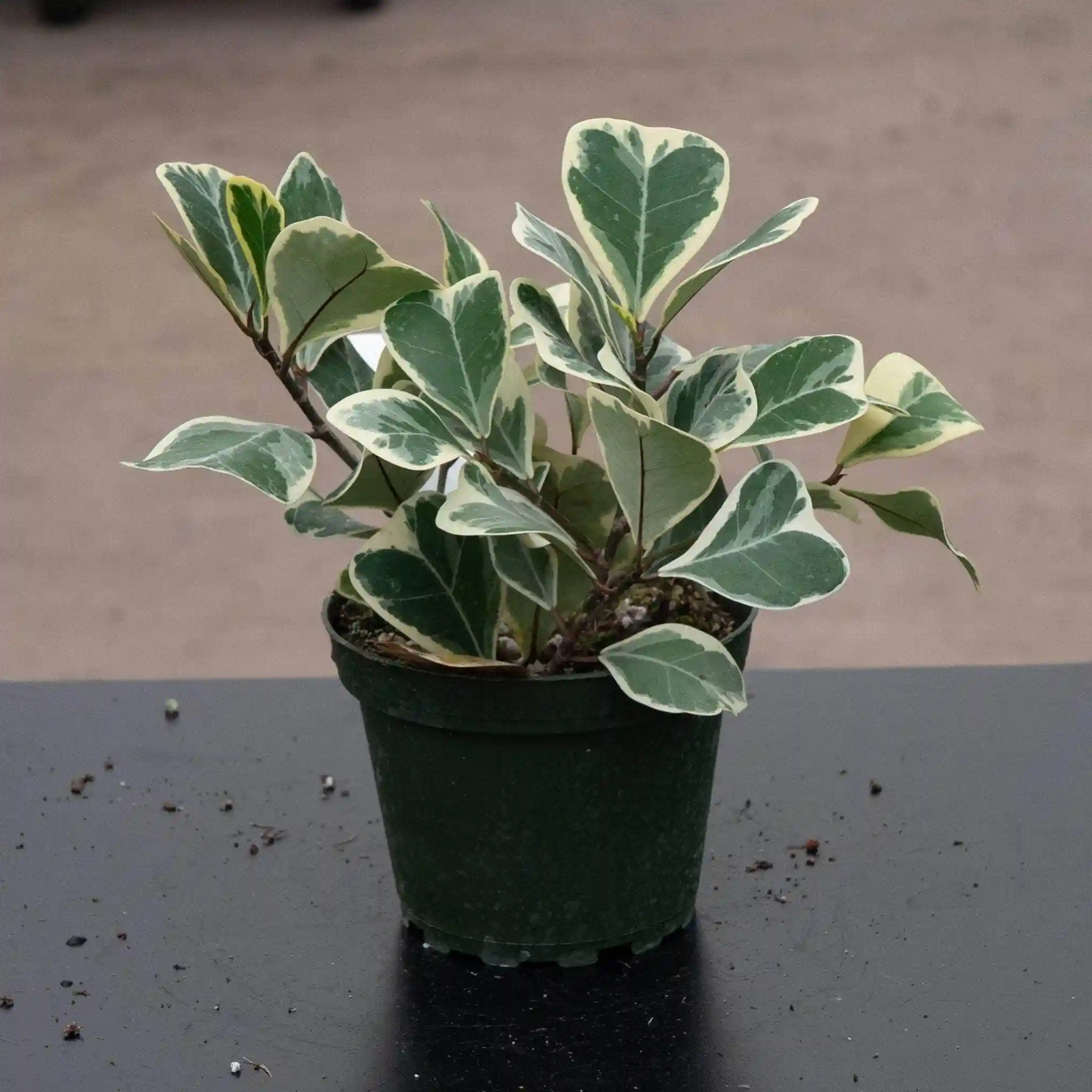
Triangular Fycus
Semi Outdoor
View & Listen Plant Education
Triangular Fycus - Video Guide
Watch Video
All Details
I am a striking and sculptural succulent plant known for my unique three-sided, triangular stems that grow upright in a branching, candelabra-like form. Often called the "Triangle Ficus" or "Triangle Fig," I am not a true Ficus but share a similar common name due to my geometric appearance. My stems are green, fleshy, and capable of photosynthesis, while small leaves may appear briefly under ideal conditions. I add a bold, architectural element to modern indoor spaces, rock gardens, and succulent collections.
I am a striking and sculptural succulent plant known for my unique three-sided, triangular stems that grow upright in a branching, candelabra-like form. Often called the "Triangle Ficus" or "Triangle Fig," I am not a true Ficus but share a similar common name due to my geometric appearance. My stems are green, fleshy, and capable of photosynthesis, while small leaves may appear briefly under ideal conditions. I add a bold, architectural element to modern indoor spaces, rock gardens, and succulent collections.
Native to dry, arid regions of Africa, particularly South Africa and Namibia, I thrive in rocky, well-draining soils and sunny environments. I have been cultivated worldwide as an ornamental succulent due to my unusual shape and low-maintenance nature.
I am drought-tolerant and prefer infrequent, deep watering. Allow the soil to dry out completely between waterings. Water sparingly in winter when I am dormant. Overwatering is the most common cause of root rot and stem collapse.
I thrive in bright, direct sunlight. I require at least 6–8 hours of full sun daily to maintain my compact shape and prevent etiolation (stretching). Indoors, a south or west-facing window is ideal.
I flourish in warm to hot temperatures between 20°C to 35°C. I am sensitive to frost and temperatures below 5°C. In colder climates, I should be grown indoors or in containers that can be moved inside during winter.
Plant me in a well-draining cactus or succulent mix, ideally in a terracotta pot with drainage holes. I can be planted outdoors in rock gardens or sandy soil in frost-free regions. Space plants to allow for upright and branching growth.
Feed me lightly during the growing season (spring and summer) with a diluted, balanced fertilizer once every 2–3 months. Avoid fertilizing in autumn and winter.
Botanical name: Euphorbia trigona (commonly known as African Milk Tree or Cathedral Cactus). Family: Euphorbiaceae. I contain a milky, latex-like sap that is toxic and can cause skin and eye irritation—handle with care.
Toxic to pets and humans if ingested or if sap contacts skin or eyes. The milky latex can cause vomiting, drooling, and irritation. Keep me well out of reach of cats, dogs, and children.
Low. While I contribute oxygen, I am not known for significant air purification. My value lies in my sculptural form and ease of care.
I add dramatic structure to indoor and outdoor succulent displays. I am extremely drought-tolerant and low-maintenance, making me perfect for beginners and busy plant owners. I can also grow quite tall, adding vertical interest.
Overwatering leads to root and stem rot. Mealybugs and spider mites may infest stems in dry indoor air. Stretching or leaning indicates insufficient light. Sap exposure can cause skin irritation—always wear gloves when handling.
I am a long-lived perennial succulent. With proper care, I can thrive for 10–20 years or more, gradually growing taller and developing more branches over time.
Everyday 8:30AM to 6:30PM

Akola, Road, Badnera, Amravati, Maharashtra 444701