
Mithi Badam
Avenue Trees
View & Listen Plant Education
Mithi Badam - Video Guide
Watch Video
All Details
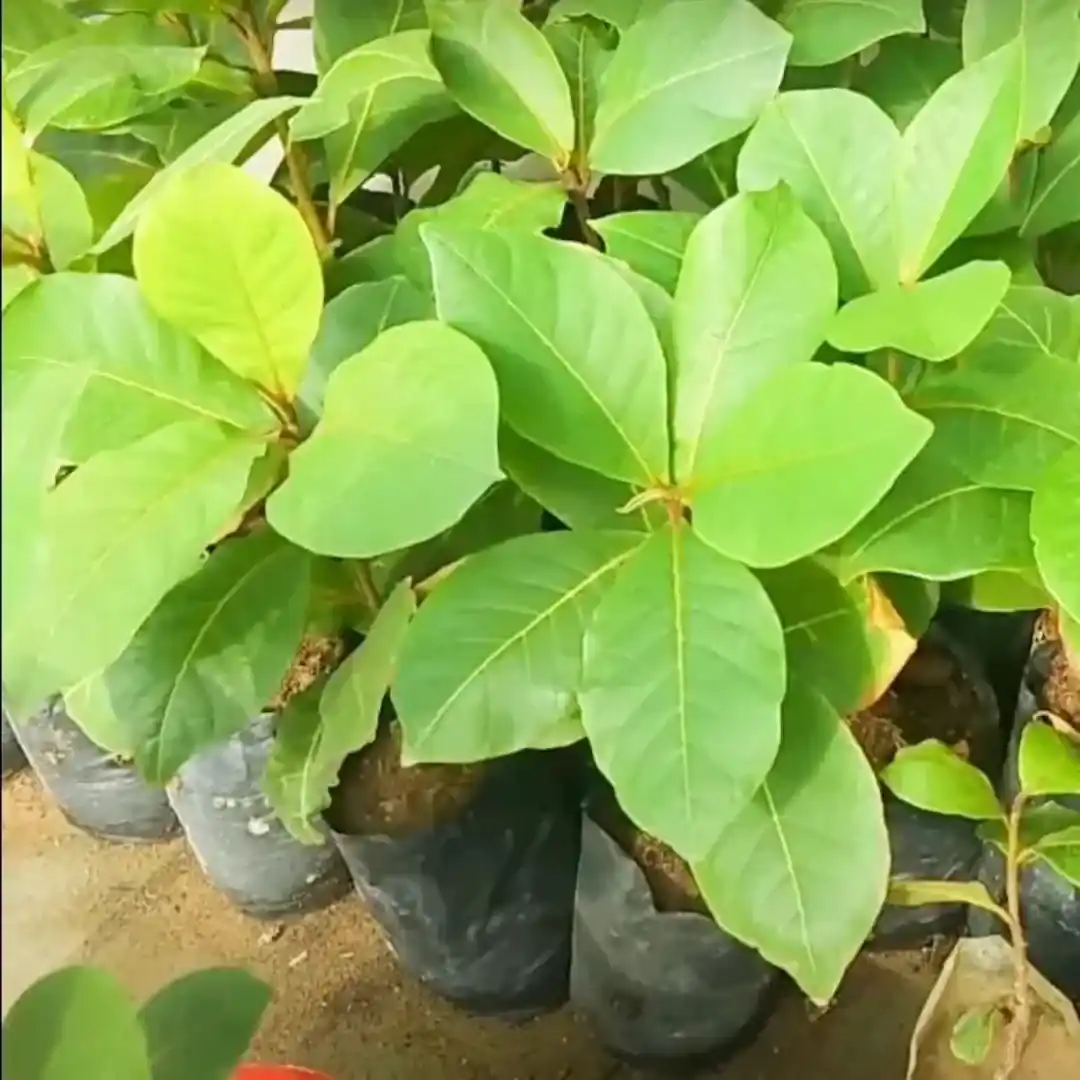
Mithi Badam (Indian Almond / Terminalia catappa) is a tropical shade tree known for its wide canopy, edible seeds, and seasonal leaf color changes. It is commonly planted along roadsides, parks, and coastal areas in India for its ornamental value and environmental benefits. The seeds, often called “Mithi Badam,” resemble almonds and are mildly sweet when ripe.
I am a large tropical tree with a spreading crown and almond-like seeds. My leaves turn red before falling, adding seasonal color to landscapes, while my seeds are edible and mildly sweet.
Native to Southeast Asia and the Pacific, I am widely cultivated across India, especially in coastal and urban regions. I thrive in tropical climates and tolerate saline soils, making me ideal for coastal planting.
I require moderate watering during establishment and thrive with natural rainfall once mature. I am drought-tolerant and resilient in dry conditions, though I benefit from occasional deep watering in summer.
I grow best in full sun, where my canopy can expand widely. Shade reduces my leaf density and slows growth, so I should be planted in open, sunny locations.
I flourish in warm climates between 25–35°C. I am sensitive to frost and perform best in tropical and subtropical zones with consistent warmth.
Plant me in deep, well-drained soil with at least 5 meters spacing. I am ideal for avenue planting, coastal greening, and large parks due to my expansive canopy and soil-binding roots.
I respond well to organic compost and occasional NPK fertilizer during early growth. Mature trees require minimal feeding unless grown in poor soils.
Botanical name: Terminalia catappa. Family: Combretaceae. I am often confused with almond trees but belong to a different botanical group.
My seeds are edible for humans but should be kept away from pets due to potential digestive irritation. Leaves and bark are not typically consumed.
I offer strong environmental benefits by reducing dust, absorbing CO₂, and stabilizing soil. My large leaves trap airborne particles and improve microclimate conditions.
I provide shade, edible seeds, seasonal leaf color, and coastal resilience. My roots help prevent erosion, and my canopy supports urban biodiversity.
I am generally hardy but may suffer from leaf spot, caterpillars, or fungal infections in humid conditions. Regular pruning helps maintain shape and airflow.
I can live 50–80 years, growing rapidly in the first decade. My canopy expands with age, making me a long-term asset for shade and environmental restoration.
Everyday 8:30AM to 6:30PM

Akola, Road, Badnera, Amravati, Maharashtra 444701