

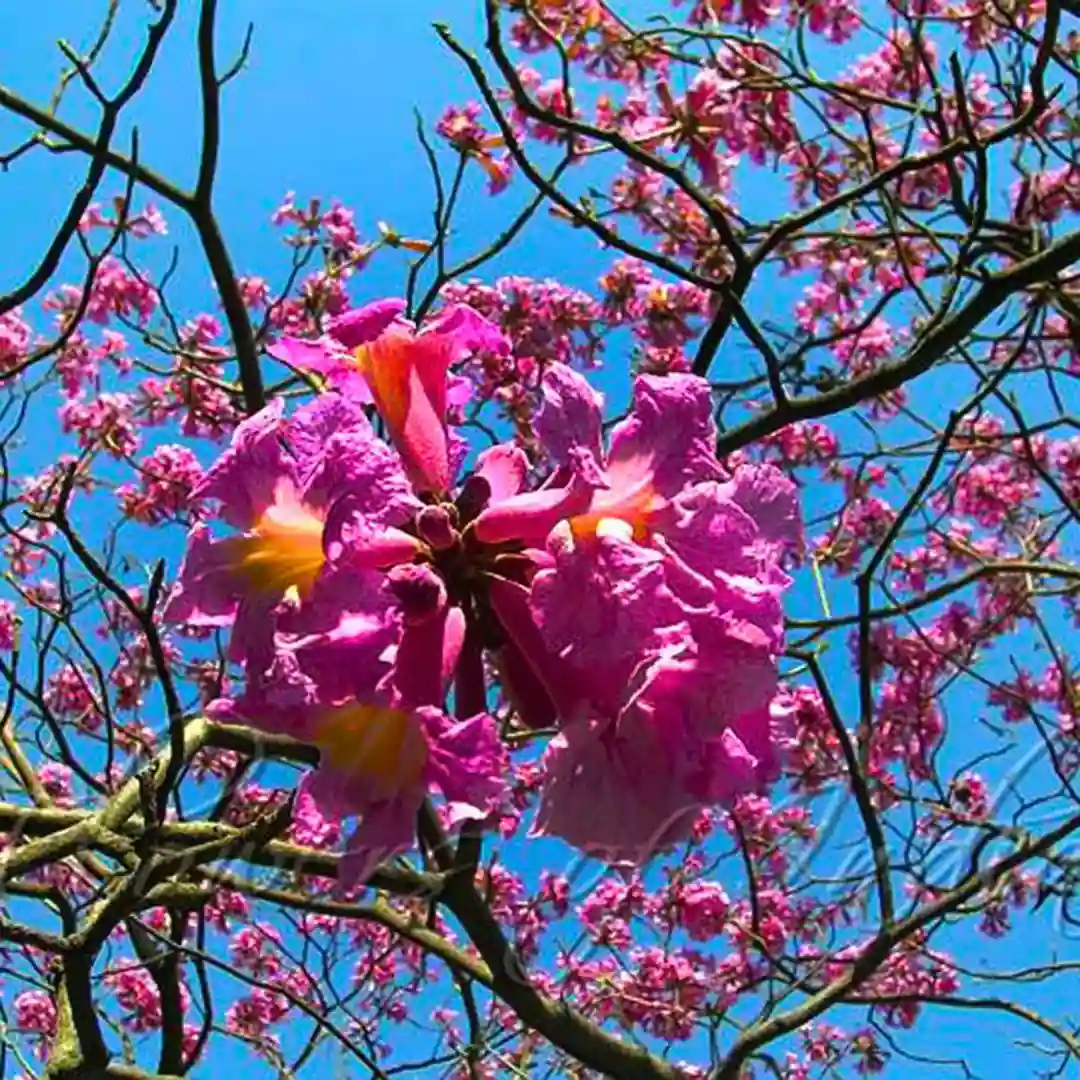
Tabebuia Rosea Plant
Avenue Trees
View & Listen Plant Education

Tabebuia Rosea Plant - Video Guide
Watch Video
All Details
Hello, rosy sky admirer! I am the Tabebuia Rosea, your majestic and breathtaking flowering tree known for my stunning canopy of pink to rose-purple trumpet-shaped blooms. Often called the "Pink Trumpet Tree" or "Rosy Trumpet Tree," I paint the sky in shades of pink when I flower, usually in spring before my new leaves emerge. I'm here to bring a touch of fairy-tale beauty and tropical splendor to your landscape!
I am a large, deciduous tree with a spreading, umbrella-like crown and compound leaves that create dappled shade.
My most spectacular feature is my massive floral display—thousands of trumpet-shaped flowers in shades of pale pink to deep rose that completely cover my branches.
I often flower on leafless branches, creating an unforgettable pink cloud effect against the blue sky.
I'm the national tree of both El Salvador and Venezuela, celebrated for my extraordinary beauty.
I am native to tropical regions of the Americas, from Mexico to Venezuela and Ecuador.
I am drought-tolerant once established but appreciate regular watering during my first 2-3 years.
Water me deeply once a week during dry periods.
Mature trees can generally survive on seasonal rainfall.
I have good drainage requirements and dislike waterlogged soil.
I am a sun lover!
I need full, direct sunlight for at least 6-8 hours daily for optimal growth and flowering.
I will not reach my full flowering potential in shaded conditions.
I thrive in warm, tropical to subtropical climates between 20°C and 35°C.
I'm sensitive to frost, especially when young.
I'm perfectly suited to the Indian climate in most regions.
Choose a spacious, open location with plenty of room for my wide-spreading canopy.
Ensure well-draining soil—I'm adaptable to various soil types including sandy and clay soils.
Dig a hole twice as wide as the root ball and plant me at the same depth.
Water thoroughly after planting and stake young trees if needed.
Mulch around the base to retain moisture and suppress weeds.
I have a strong, deep root system, so plant me away from buildings and underground utilities.
I'm not a heavy feeder. A balanced slow-release fertilizer applied in early spring can support growth.
Compost or well-rotted manure applied annually will keep me healthy.
Too much nitrogen may reduce flowering.
Scientific Name: Tabebuia rosea (also known as Handroanthus impetiginosus in some classifications)
Common Names: Pink Tecoma, Pink Poui, Rosy Trumpet Tree, Amapa
Plant Family: Bignoniaceae
Plant Type: Outdoor flowering tree
All parts of me are considered toxic if ingested by pets or humans. Please plant me where animals don't graze.
As a large tree, I'm excellent at improving air quality by absorbing carbon dioxide, releasing oxygen, and providing shade that cools the environment.
Breathtaking floral display that transforms entire landscapes
Provides excellent shade with my broad, spreading canopy
Attracts pollinators like bees, butterflies, and hummingbirds
Relatively low maintenance once established
Beautiful timber that's durable and used for fine furniture
Root rot - From overwatering or poor drainage
Leaf spot - Fungal issues in humid conditions
Caterpillars - May occasionally feed on leaves but rarely cause serious damage
Wind damage - My branches can be susceptible to breaking in strong storms
Limited flowering - Usually due to insufficient sunlight or the tree being too young
I'm a long-lived tree! With proper conditions, I can thrive for 80-100 years or more, growing more stately and magnificent with each passing year. My annual pink floral spectacle becomes a cherished seasonal event that people eagerly anticipate year after year.
Everyday 8:30AM to 6:30PM

Akola, Road, Badnera, Amravati, Maharashtra 444701