

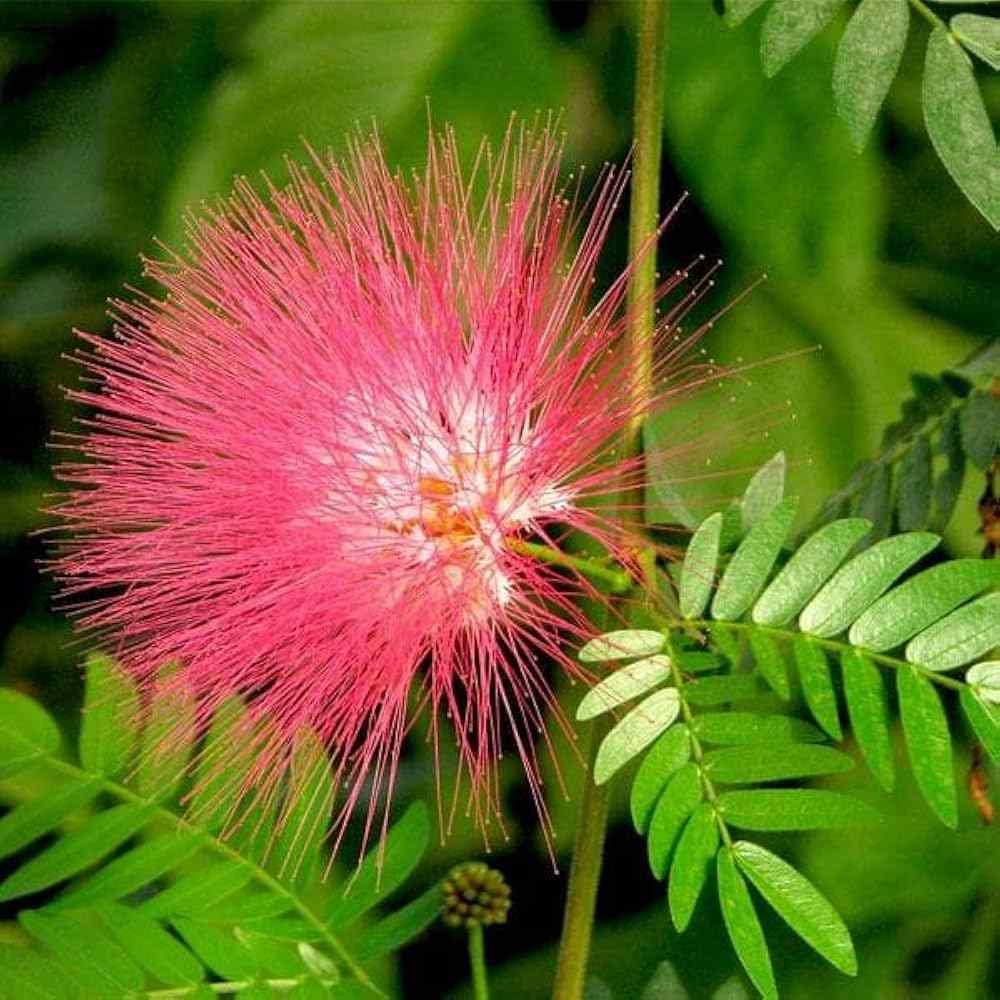
Rain Tree Plant
Avenue Trees
View & Listen Plant Education

Rain Tree Plant - Video Guide
Watch Video
All Details
Hello, gentle giant! I am the Rain Tree, your majestic and generous shade tree known for my wide, umbrella-like canopy and delicate, fern-like leaves. I'm called the "Rain Tree" because my leaves often fold up before rain, and I sometimes drip water from my tips—a magical sight! I'm here to provide cool shade, beauty, and a sense of peace to your garden or landscape.
I am a large, spreading deciduous tree with a broad, dome-shaped crown that can provide shade over a large area.
My leaves are bipinnate—beautifully divided into small leaflets that close up in the evening or before rainfall.
I produce fluffy, pink-and-white flower clusters that look like powder puffs, followed by long, dark seed pods.
I'm fast-growing and can live for many decades, becoming a beloved landmark.
I am native to tropical America but was introduced to India and have become a cherished part of the landscape, especially in parks, roadsides, and large gardens.
I am drought-tolerant once established but grow best with regular watering when young.
Water me deeply once a week during dry periods for the first 2–3 years.
Mature trees generally do not need additional watering unless in extreme drought.
I love full sun.
I need open space and plenty of sunlight to develop my full, spreading canopy.
I will not grow well in shaded or crowded conditions.
I thrive in tropical and subtropical climates with temperatures between 20°C and 35°C.
I am sensitive to frost and prolonged cold.
I grow well in coastal regions as I am salt-tolerant.
Choose a large, open area where I have room to spread my wide branches.
Ensure the soil is well-draining; I am adaptable to a range of soil types.
Dig a hole twice as wide and as deep as the root ball.
Place me in the hole, backfill with soil, and water generously.
Mulch around the base to retain moisture and suppress weeds.
Stake young trees in windy locations until established.
I generally do not need regular fertilization if planted in decent soil.
A light application of compost or balanced slow-release fertilizer in spring can support young trees.
Mature trees rarely need feeding.
Scientific Name: Samanea saman (formerly Albizia saman)
Common Names: Monkey Pod, Saman, Cow Tamarind, Gulabi Siris
Plant Family: Fabaceae
Plant Type: Outdoor shade tree
I am generally considered non-toxic, but it's always best to prevent pets from eating plant parts.
I am a powerful natural air purifier—my large canopy absorbs carbon dioxide, releases oxygen, and traps dust, helping cool and clean the air.
Provides excellent, widespread shade perfect for parks and gathering spots
Beautiful and graceful appearance with seasonal flowers
Enriches soil by fixing nitrogen through root nodules
Tolerant of pruning and suitable for bonsai
Long-lived and low maintenance once established
Root rot – In waterlogged or poorly drained soils
Leaf-eating caterpillars – Generally not serious
Fungal leaf spots – In very humid or wet weather
Branches may break – In strong winds or storms due to wide, heavy canopy
Weed competition – When young; keep base clear
I am a long-lived tree and can thrive for over 80–100 years, growing more grand and generous with age. I become a home for birds, a cool retreat for people, and a living legacy in the landscape.
Everyday 8:30AM to 6:30PM

Akola, Road, Badnera, Amravati, Maharashtra 444701