
Vichiya palm
Palms
View & Listen Plant Education
Vichiya palm - Video Guide
Watch Video
All Details
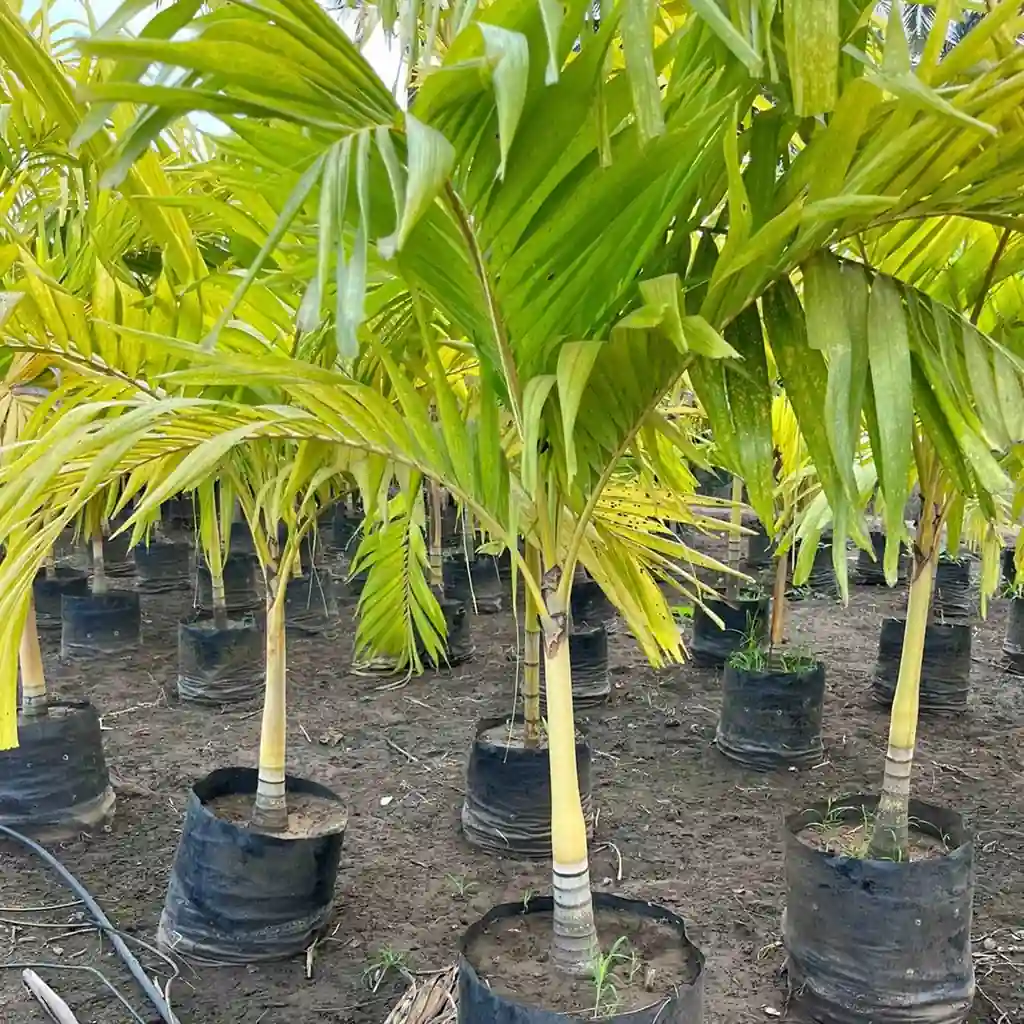
I am the Vichiya Palm, the hardy sentinel of arid lands. My tall, rugged trunk, often covered in a characteristic diamond pattern from old leaf scars, is crowned with a dense, arching canopy of stiff, silvery-green to bluish-green fronds. I stand resilient against heat and drought, providing a classic, majestic palm silhouette to dry landscapes and rural vistas.
I am a tall, solitary, drought-tolerant date palm (Phoenix sylvestris), widely known as the Indian Wild Date Palm or Silver Date Palm. I am prized for my adaptability to poor soils, extreme heat, and minimal water, making me a staple in dryland agroforestry and rustic landscaping.
Native to the Indian subcontinent, from Pakistan across India to Bangladesh. Thrives naturally in dry, rocky, and scrub forest regions.
Highly drought-tolerant once established. Requires deep, infrequent watering. Overwatering or poor drainage can be detrimental. Perfect for xeriscaping.
Requires full, blazing sun (8+ hours daily) for optimal growth and to develop its robust form. It is a sun-loving palm of open areas.
Thrives in hot, arid to semi-arid climates (25-40°C). Mature trees can tolerate light, brief frosts but prefer frost-free conditions.
Plant in well-drained, sandy, or even rocky soil. Needs ample vertical and horizontal space for its large crown and extensive root system. Often planted along field boundaries, in large parks, and as avenue trees in dry regions.
A light feeder. Application of compost or a slow-release palm fertilizer once a year during the monsoon/growing season is sufficient.
Botanical name: Phoenix sylvestris; Common names: Indian Wild Date Palm, Silver Date Palm, Vichiya, Khajur; Family: Arecaceae.
⚠️ Caution advised. Like other Phoenix palms, the sharp spines at the leaf bases are a significant physical hazard. The fruit is edible but not considered pet food.
High. As a large, evergreen tree, it is an excellent oxygen producer and provides significant shade, cooling hot, dry environments.
Extremely hardy and low-maintenance for dry regions; sap is tapped to make neera and palm sugar (gur); provides valuable shade in arid farmland; fruit is edible though not as commercial as the Date Palm (P. dactylifera); important ecological and cultural tree in rural India.
The sharp, needle-like spines at the leaf bases are dangerous and require careful handling. Can be susceptible to red palm weevil and bud rot if overwatered. Slow-growing when young.
Long-lived perennial palm. Can live for well over 100 years, reaching heights of 10-15 meters with a wide, spreading crown.
Everyday 8:30AM to 6:30PM

Akola, Road, Badnera, Amravati, Maharashtra 444701