

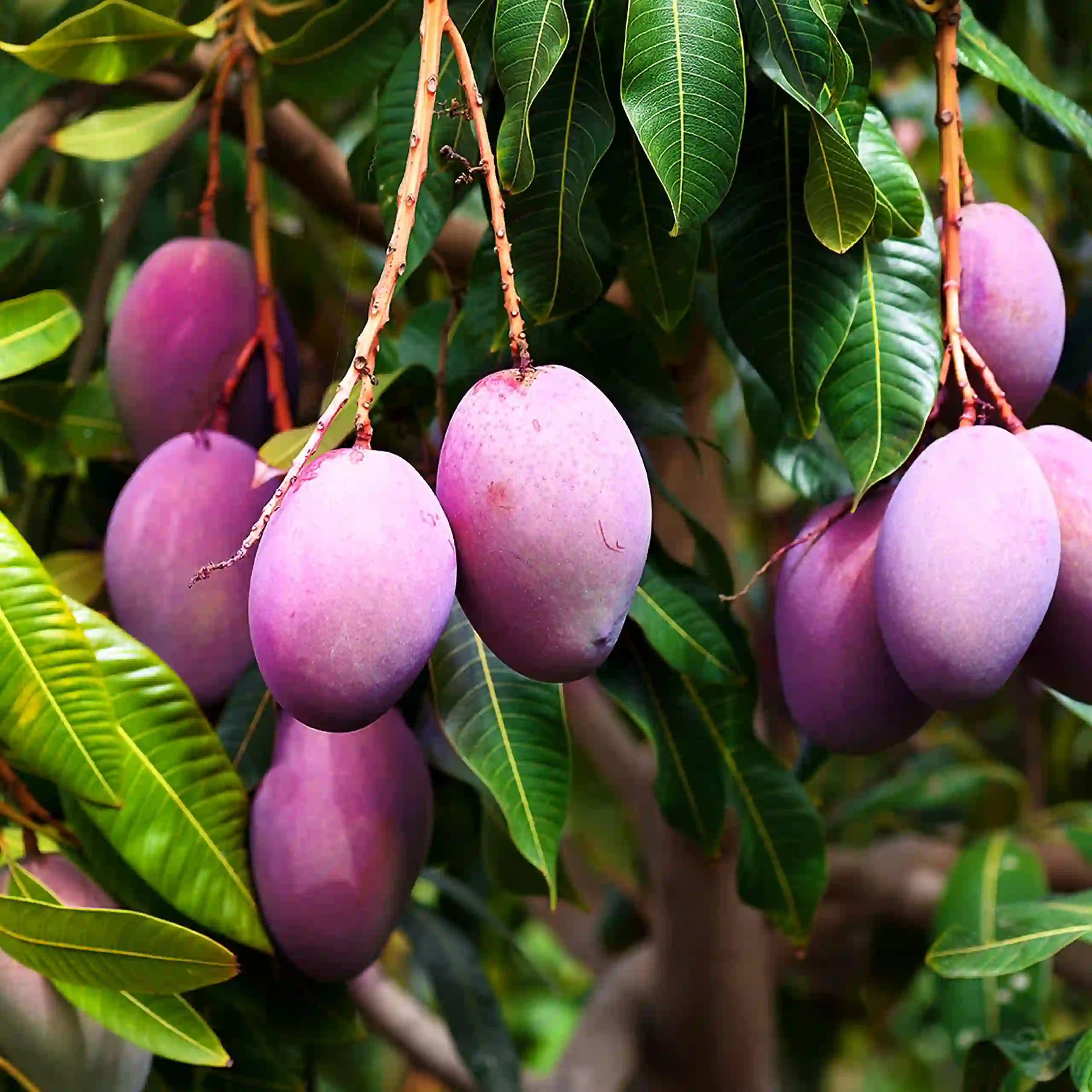
Black mango
Fruit
View & Listen Plant Education

Black mango - Video Guide
Watch Video
All Details
I am the Black Mango, the enigmatic jewel of the grove. My fruit is distinguished by its very deep green, almost ebony-hued skin when immature, which ripens to a dark olive-green or reddish-purple blush. Within lies a vibrant, fiberless orange-gold flesh of intense, rich sweetness with complex aromatic notes, offering a striking contrast between my mysterious exterior and luxurious interior.
I am a specific mango (Mangifera indica) cultivar known for the exceptionally dark color of its skin. I am prized by enthusiasts for my unique appearance, superb eating quality, and often, late-season harvest.
Likely a cultivated variety selected from the Indian subcontinent or Southeast Asia. Specific named cultivars include 'Black Prince', 'Pirie', or 'Kensington Pride' in certain stages, known for dark skin.
Requires consistent deep watering during fruit set and development for optimal size and juice content. Sensitive to waterlogging. A dry period before flowering is beneficial.
Demands full, intense sun (8+ hours daily) to develop the dark pigmentation in the skin and high sugar content in the pulp.
Thrives in hot, tropical to subtropical climates (24-32°C). Requires sustained heat for proper ripening and flavor development.
Plant in deep, well-drained soil with ample space for canopy development. Grafted plants ensure true-to-type fruit. Requires standard mango spacing (8-10m).
Benefits from a balanced mango fertilizer regimen: higher nitrogen for growth, switching to higher potassium and phosphorus during flowering and fruiting to enhance flavor and color.
Botanical name: Mangifera indica (dark-skinned cultivar); Common names: Black Mango, Black Prince Mango; Family: Anacardiaceae.
The ripe pulp is safe in small amounts. However, the peel, sap, and leaves contain urushiol and can cause skin irritation and stomach upset. The seed is a choking hazard.
High. As a large, evergreen tree, it contributes significantly to oxygen production, carbon sequestration, and provides dense, cooling shade.
Unique and visually striking fruit that stands out in the market; typically has excellent, rich flavor and smooth texture; a conversation piece for collectors and home orchards; provides abundant shade.
Susceptible to standard mango diseases: anthracnose and powdery mildew, especially in humid climates. Attracts fruit flies and mango hoppers. The dark skin can hide external ripening cues, making harvest timing a skill.
Long-lived perennial tree. Can remain productive for 40-60 years or more. Grows into a large tree, 5-8 meters tall or more, depending on rootstock and pruning.
Everyday 8:30AM to 6:30PM

Akola, Road, Badnera, Amravati, Maharashtra 444701