
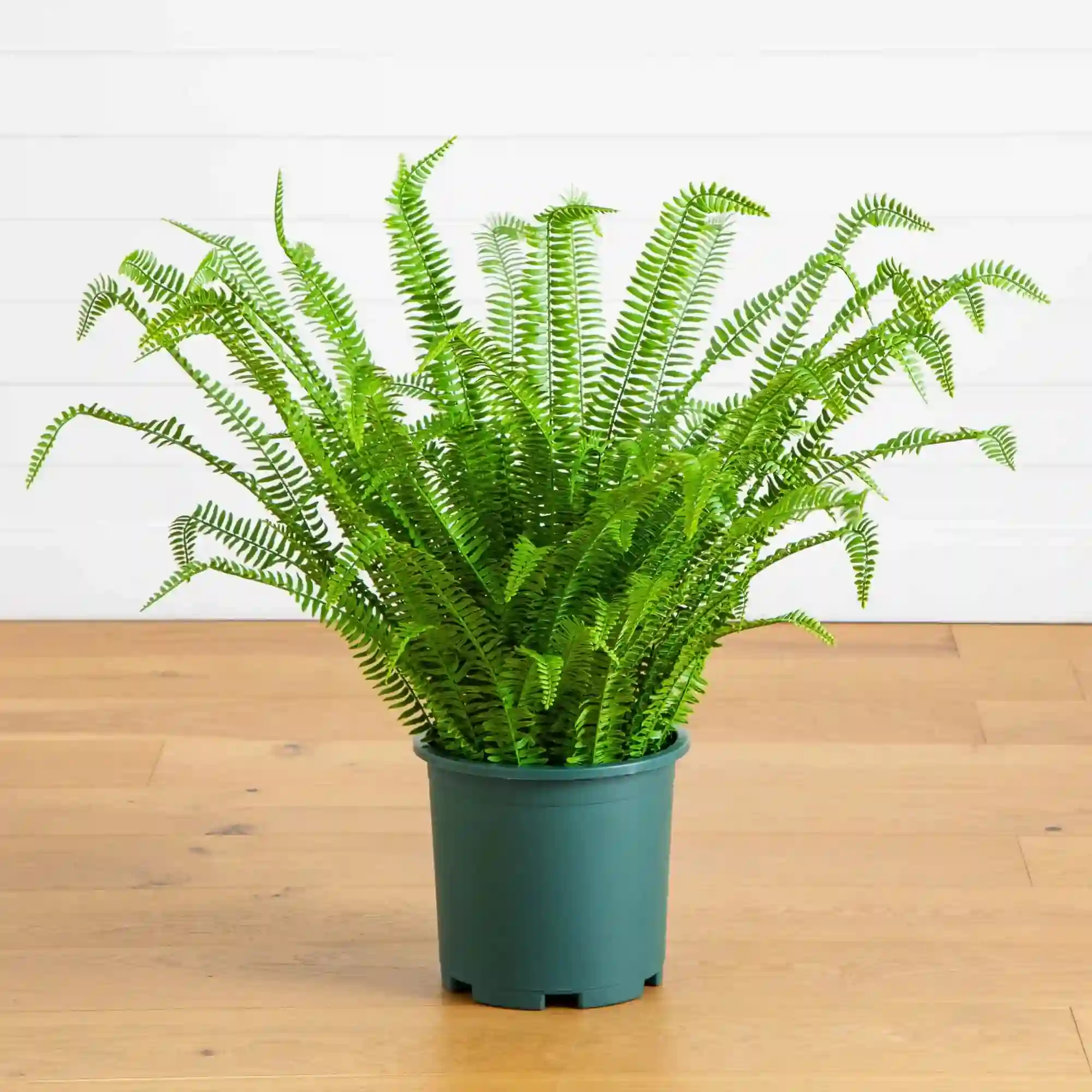
Fern
Indoor
View & Listen Plant Education

Fern - Video Guide
Watch Video
All Details
I am the Fern, the ancient whisperer of damp, shaded groves. I unfurl my intricate fronds from tight, elegant fiddleheads, creating lush, textured tapestries of green. Without flowers or seeds, I am a living relic of prehistoric forests, thriving in quiet corners and purifying the air with my serene, primeval elegance.
I am a member of a large group (Polypodiopsida) of non-flowering, vascular plants that reproduce via spores. I am prized for my diverse and graceful foliage, adaptability to low light, and ability to add a soft, lush texture to indoor and outdoor spaces.
Ancient plants with a fossil record dating back over 360 million years. Found in an immense variety of habitats worldwide, from tropical rainforests to temperate woodlands, with the greatest diversity in tropical regions.
Prefers consistently moist but not soggy soil. Most ferns have low drought tolerance and require high humidity. Water when the top inch of soil feels dry, and avoid letting the root ball dry out completely.
Generally prefers bright, indirect light to partial or full shade. Direct, harsh sun can scorch delicate fronds. They are classic understory plants.
Varies by species. Most common houseplant ferns (e.g., Boston Fern) thrive in 18-24°C. They appreciate consistent temperatures and protection from drafts, both hot and cold.
Plant in a porous, well-draining potting mix rich in organic matter (e.g., peat, coir, compost). Excellent for hanging baskets, terrariums, and shaded garden beds. Ensure pots have drainage holes.
Feed lightly with a balanced, diluted liquid fertilizer (half-strength) every 4-6 weeks during the active growing season (spring and summer). Do not fertilize in fall and winter.
Example Botanical names: Nephrolepis exaltata (Boston Fern), Platycerium bifurcatum (Staghorn Fern), Adiantum capillus-veneris (Maidenhair Fern); Common names: Fern (collective); Division: Polypodiophyta.
The majority of common ferns are non-toxic to cats and dogs (e.g., Boston Fern, Bird's Nest Fern). However, some, like the Asparagus Fern (which is not a true fern), are toxic. Always verify the specific species.
Moderate to High. NASA studies have shown many ferns (like the Boston Fern) to be excellent at removing common indoor air pollutants like formaldehyde and xylene, while also adding humidity.
Excellent air purifiers and natural humidifiers; add lush, calming greenery to low-light areas where other plants struggle; perfect for creating a tropical or woodland aesthetic; relatively low-maintenance when humidity needs are met.
Low humidity is the #1 issue, causing brown, crispy fronds. Other problems include overwatering (root rot), underwatering, pest infestations (scale, mealybugs, spider mites), and too much direct sun (leaf scorch).
Perennial plants. With proper care, many ferns can live for decades. They grow primarily outward via rhizomes, with fronds having a finite lifespan but being continuously replaced.
Everyday 8:30AM to 6:30PM

Akola, Road, Badnera, Amravati, Maharashtra 444701