

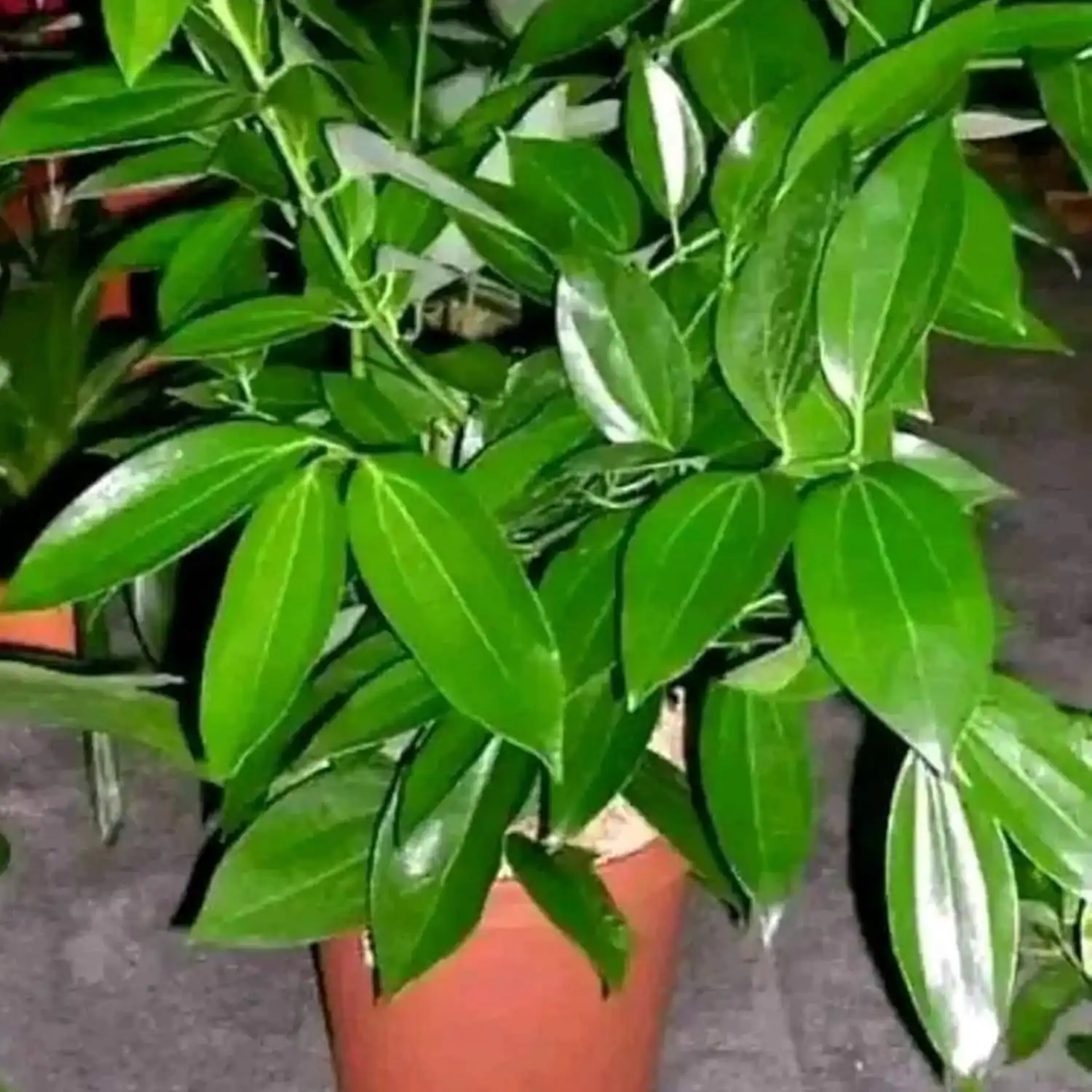
tej patta plant
Herbs
View & Listen Plant Education

tej patta plant - Video Guide
Watch Video
All Details
I am the Tej Patta, the aromatic soul of Indian curries. I am a handsome, evergreen tree with long, slender, lance-shaped leaves that release a warm, spicy-camphoraceous fragrance when crushed. My leaves are dried to become the essential "bay leaf" of Indian kitchens, adding depth and complexity to dals, biryanis, and meat dishes.
I am a moderate-sized, dioecious (separate male and female plants) evergreen tree, cultivated primarily for my aromatic leaves which are a fundamental spice in Indian, Nepali, and Bhutanese cuisines. I am distinct from the Mediterranean Bay Laurel (Laurus nobilis).
Native to the southern slopes of the Himalayas, spanning India, Nepal, and Bhutan. Cultivated in hill stations and subtropical regions across the Indian subcontinent.
Prefers consistently moist soil, especially when young. Mature trees have moderate drought tolerance but thrive with regular watering during dry periods. Good drainage is essential.
Grows well in full sun to partial shade. In hotter lowland climates, afternoon shade is beneficial. For optimal leaf oil production, ample light is preferred.
Prefers cool to warm subtropical climates (15-28°C). Can tolerate light frosts when established but is not suited for prolonged freezing temperatures or intense tropical heat.
Plant in rich, well-drained, slightly acidic to neutral soil. Space trees 3-4 meters apart. Can be grown in large containers and pruned to a manageable bush size for leaf harvesting.
Benefits from annual applications of compost or well-rotted manure in spring. A light application of a balanced, slow-release fertilizer can promote lush leaf growth.
Botanical name: Cinnamomum tamala; Common names: Indian Bay Leaf, Indian Cassia Lignea, Tejpat, Tamalpatra; Family: Lauraceae.
⚠️ Use caution. While used as a culinary spice in small, dried amounts, the essential oils in the leaves can be potent. Ingestion of large quantities of fresh or dried leaves may cause digestive upset, vomiting, or central nervous system effects in pets. Best to keep out of reach.
Moderate. As an evergreen tree with aromatic foliage, it contributes to a fresh atmosphere. The leaves have mild antimicrobial properties when volatilized.
Leaves are a crucial, non-substitutable spice in many Indian recipes; the bark is sometimes used as a cinnamon substitute; the tree provides good shade and is attractive in landscape gardens; has uses in traditional medicine.
Relatively pest-free. Can be susceptible to scale insects and sooty mold. The main issue is slow growth from seed. Leaves for cooking must be properly dried to develop flavor and reduce potential toxicity from raw consumption.
Long-lived perennial tree. Can live for several decades, growing 6-12 meters tall in the wild, but often kept smaller through pruning in cultivation.
Everyday 8:30AM to 6:30PM

Akola, Road, Badnera, Amravati, Maharashtra 444701