
Washingtonia Palm Plant
Palms
View & Listen Plant Education
Washingtonia Palm Plant - Video Guide
Watch Video
All Details
Hello, architect of the sun-drenched landscape! I am the Washingtonia Palm, your iconic and statuesque symbol of the desert oasis and Californian boulevard. I am a palm of immense scale and rugged beauty, known for my tall, straight trunk and grand crown of large, fan-shaped fronds. I am a resilient giant, casting dramatic shadows and evoking a sense of warm, arid grandeur.
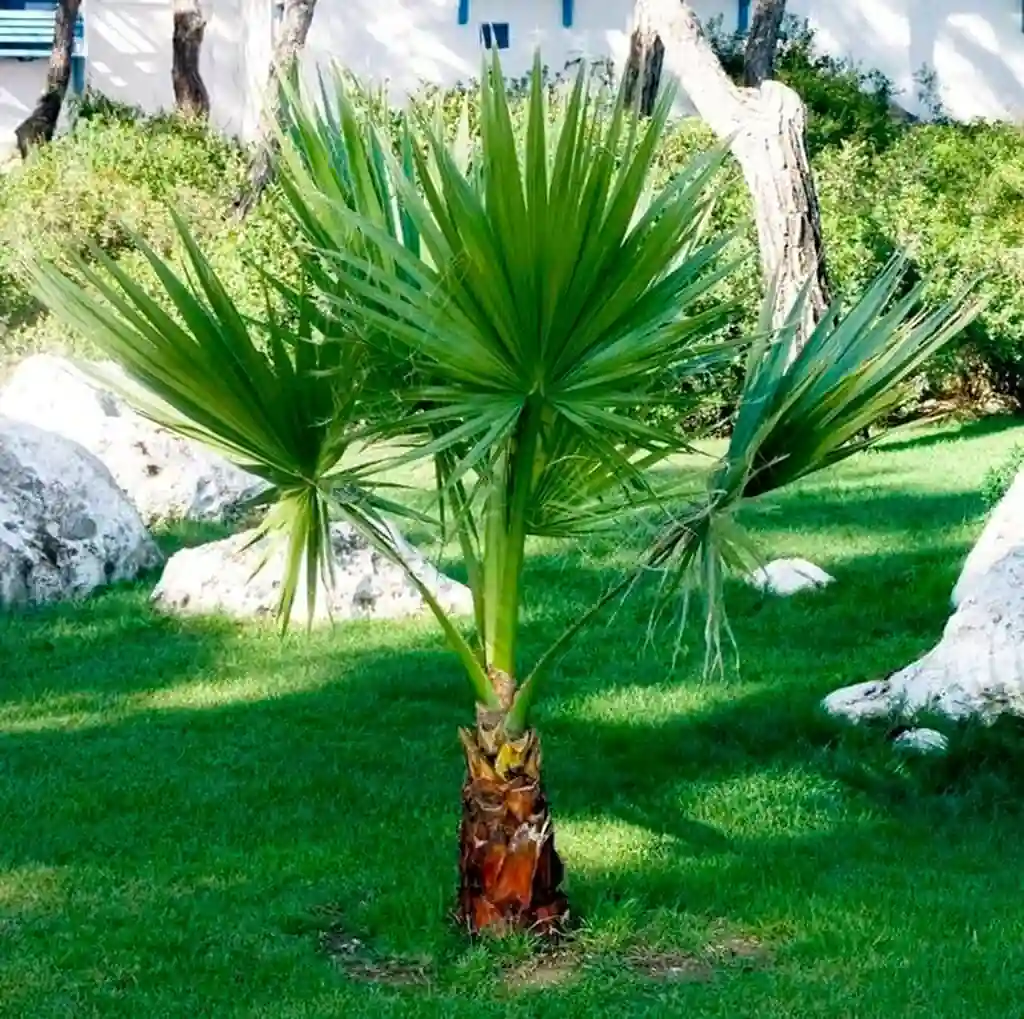
I am a massive, single-trunked fan palm, known for my incredibly fast growth and impressive height.
My most distinctive feature is my "hula skirt" – a dense thatch of old, dead fronds that persist around the trunk unless removed (a process called "hurricane cutting").
My living fronds are large, costapalmate (fan-shaped with a central rib), and armed with sharp, hooked teeth along the petiole (stem).
I produce large, branched inflorescences of small, creamy-white flowers that extend beyond the fronds, followed by massive quantities of small, black, berry-like fruit.
I am a tough, adaptable palm that quickly creates a dramatic, vertical accent.
I am native to the desert oases and canyons of the Southwestern United States (Arizona, California) and Northwestern Mexico.
I have Low water needs once established. I am deeply drought-tolerant.
Water me deeply but infrequently to encourage a strong, deep root system. I am highly susceptible to root rot in constantly moist soil.
Mature trees in landscapes can often survive on natural rainfall alone.
I am a relentless sun-worshipper! I demand Full Sun.
I need direct, unfiltered sunlight for most of the day to grow strong and healthy.
I am built for heat and are suited to USDA zones 8-11. I am one of the most cold-hardy of the tall, feathery palms.
I thrive in hot, dry conditions and can tolerate temperatures down to -6°C to -9°C for short periods, though frost can damage fronds.
My ideal temperature range is between 20°C and 35°C.
I am a tree for vast spaces—parks, commercial landscapes, wide boulevards, and large properties. My size and falling debris make me unsuitable for small gardens or near pools.
I am adaptable to a wide range of well-draining soils, including sandy, loamy, and clay.
Ensure I have ample space for my massive crown and for the falling fronds and fruit, which can be messy.
My aggressive root system can lift hardscapes, so plant me away from pavement and foundations.
I am a light feeder. Apply a palm-specific, slow-release fertilizer in the spring.
Mature trees in good soil often require no fertilization at all.
Over-fertilizing is unnecessary and can lead to overly rapid, weaker growth.
Scientific Name: Washingtonia spp. (e.g., W. filifera - California Fan Palm, W. robusta - Mexican Fan Palm)
Common Names: Mexican Fan Palm, Skyduster (W. robusta), California Fan Palm (W. filifera)
Plant Family: Arecaceae
Plant Type: Evergreen palm tree
CAUTION ADVISED. While not considered highly toxic, the sharp, hooked teeth on my petioles can cause significant physical injury to pets (and people). The fallen fruit can also create a messy, slippery hazard.
As a massive tree, I am a powerhouse for carbon sequestration and oxygen production. My large canopy helps filter dust and particulate matter from the air, contributing significantly to urban air quality.
Provides an incredibly fast-growing, tall screen or focal point.
Creates a classic, "California" or "Desert" aesthetic.
Offers dense, cooling shade once mature.
The persistent "hula skirt" provides critical nesting habitat for birds and other wildlife.
"Hula Skirt" Debris - The persistent dead fronds are a significant fire hazard and can harbor pests like rats.
Fusarium Wilt - A serious, often fatal fungal disease that causes one-sided wilting and death of the crown.
Ganoderma Butt Rot - Another serious fungal disease that causes conks (fruiting bodies) to form on the trunk.
Petal Blight & Fruit Drop - The flowers and fruit can create a substantial mess on patios, sidewalks, and cars.
Royal Palm Bug - A pest that can cause stippling and browning of the fronds.
I am a long-lived and fast-growing palm. Under ideal conditions, I can live for 80 to 250 years, depending on the species and environment. I grow rapidly in my youth, quickly reaching for the sky, and will stand as a landmark in the landscape for generations.
Everyday 8:30AM to 6:30PM

Akola, Road, Badnera, Amravati, Maharashtra 444701