
Zamia Black Plant
Indoor
View & Listen Plant Education

Zamia Black Plant - Video Guide
Watch Video
All Details
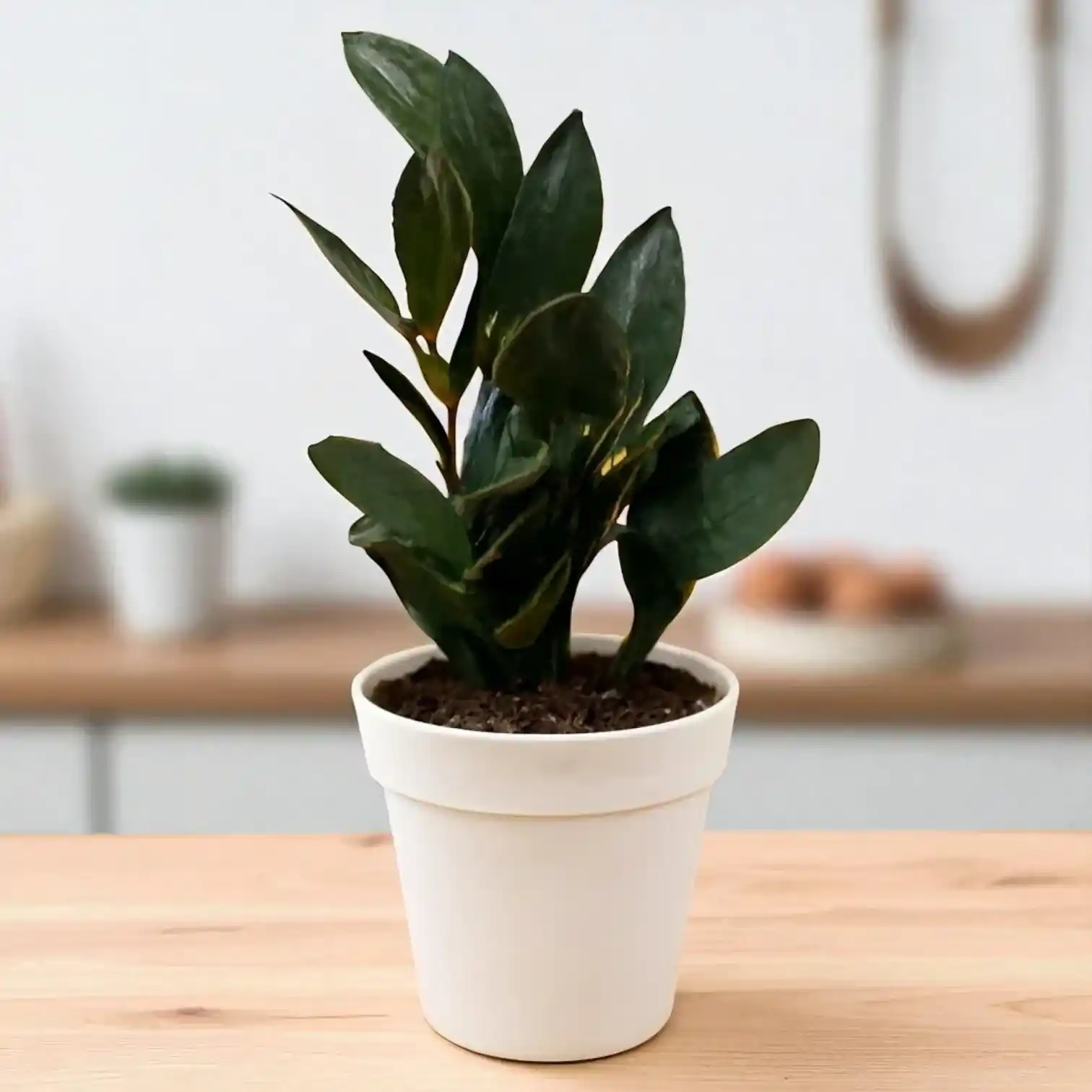
I am Zamia Black, the living fossil of dark elegance. My stout, palm-like form emerges from an underground or partially exposed woody stem, crowned with a rigid, architectural rosette of fronds. Each leaf is composed of leathery, deep olive-green to near-black, oblong leaflets, creating a dramatic, sculptural, and ancient presence in the landscape or as a bold container specimen.
I am a cycad, a prehistoric group of seed plants, often a specific dark-leaved cultivar of Zamia (likely Zamia furfuracea or a hybrid). I am prized for my extremely slow growth, palm-like tropical appearance without being a true palm, and exceptional drought tolerance once established.
The genus Zamia is native to the Americas, from the southeastern United States through the Caribbean to South America. Cultivated dark varieties are selected for their unique foliage color.
Drought-tolerant. Water deeply but infrequently, allowing the soil to dry out completely between waterings. Extremely susceptible to root rot from overwatering or poor drainage.
Prefers bright, indirect light to partial sun. Can tolerate some direct morning sun but should be protected from harsh afternoon sun, which can scorch the leaves, especially in hot climates.
Thrives in warm temperatures (20-30°C). Is not frost-tolerant and must be protected from freezing temperatures. Grows well indoors in temperate climates.
Must be planted in exceptionally well-draining soil (sandy or cactus mix). Excellent for containers, rock gardens, and xeriscapes. Ensure the caudex (stem) is not buried too deeply to prevent rot.
Feed very lightly with a balanced, slow-release fertilizer for palms/cycads during the growing season (spring/summer). Over-fertilizing can harm the plant.
Botanical name: Likely Zamia sp. (dark cultivar), often confused with Cycas revoluta (Sago Palm) but is a different genus; Common names: Cardboard Palm (for Z. furfuracea), Coontie, Black Zamia; Family: Zamiaceae.
⚠️ HIGHLY TOXIC to cats and dogs and humans. All parts of the plant contain cycasin and other toxins, which can cause liver failure, seizures, and death if ingested. Extreme caution is required.
Low. Valued primarily for its unique, prehistoric ornamental appeal rather than air purification. It grows very slowly and has a low leaf turnover.
Provides a striking, architectural, and low-maintenance focal point; excellent for drought-tolerant and tropical-themed gardens; highly pest-resistant; a fascinating conversation piece due to its ancient lineage.
Root rot from overwatering is the #1 killer. Scale insects and mealybugs can be occasional pests. Very slow growth, which can be mistaken for ill health. Leaves can yellow from nutrient deficiencies (like magnesium) in poor soil.
Extremely long-lived, slow-growing perennial. Can live for decades or even centuries. Typically grows 0.5 to 1.5 meters tall and wide, depending on the species and conditions.
Everyday 8:30AM to 6:30PM

Akola, Road, Badnera, Amravati, Maharashtra 444701