

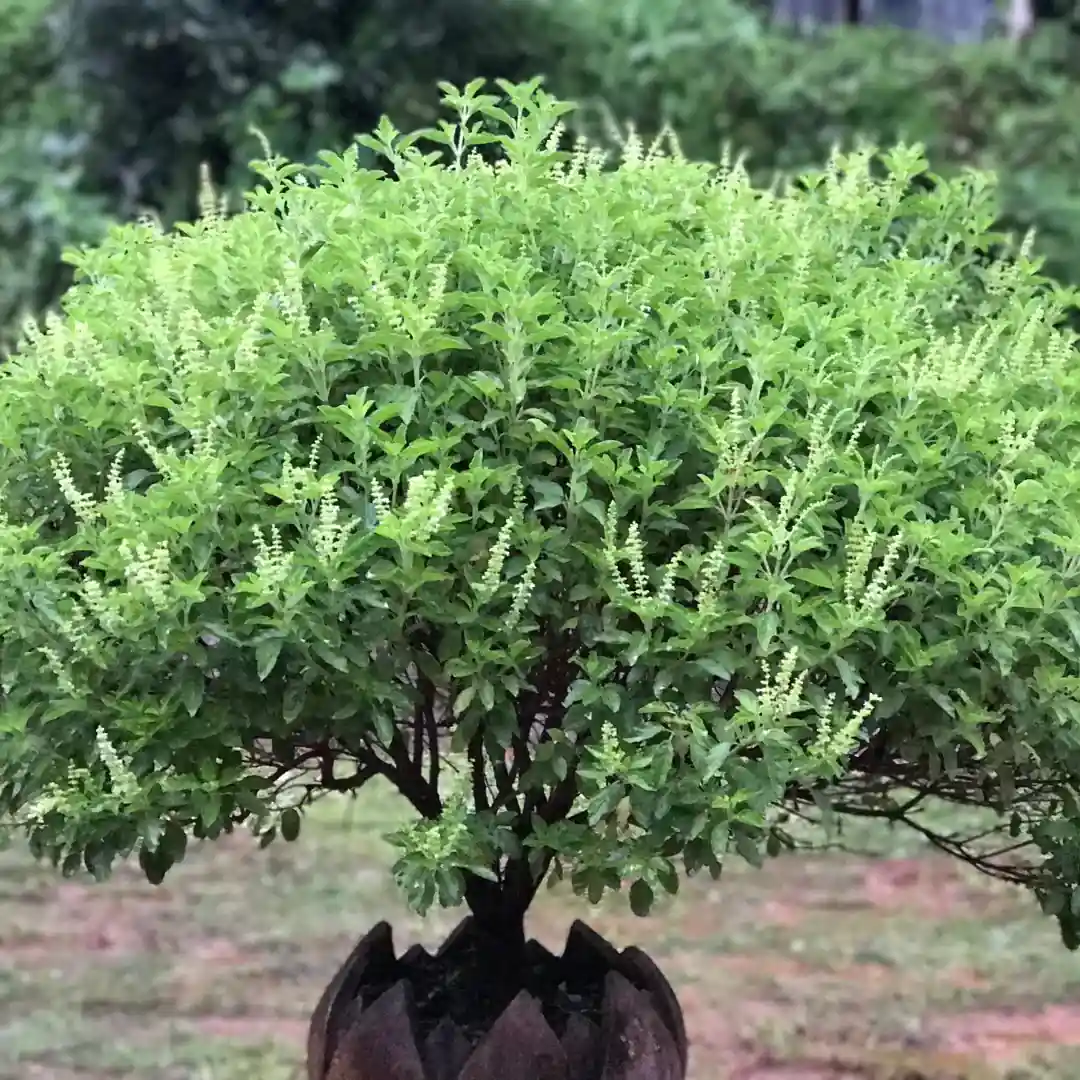
Ram Tulsi Plant
Herbs
View & Listen Plant Education

Ram Tulsi Plant - Video Guide
Watch Video
All Details
I am Ram Tulsi, the luminous and sacred protector of the home. My upright, branched form bears soft, light green, slightly serrated leaves that are tender and highly aromatic. My scent is clove-like and sweetly pungent, and I produce delicate white to pale purple flower spikes. I am revered as an incarnation of the goddess Lakshmi, purifying the air and spirit where I grow.
I am one of the two main sacred varieties of Holy Basil (Ocimum tenuiflorum / sanctum), specifically the one with green leaves and stems (Rama Tulsi). I am an essential religious, medicinal, and culinary herb in Hinduism, grown in courtyards and temples for daily worship and well-being.
Native to the Indian subcontinent and widespread across Southeast Asia. Has been cultivated for over 3,000 years for its spiritual, adaptogenic, and therapeutic properties.
Prefers consistently moist but well-drained soil. Water when the top inch of soil feels dry. Avoid overwatering and soggy roots. Enjoys high humidity.
Thrives in full sun (at least 4-6 hours of direct sunlight) for strong growth and optimal essential oil production. Can tolerate light afternoon shade in very hot climates.
Loves warmth (18-32°C). Is sensitive to cold and frost, which will damage the leaves. Grows as a perennial in tropics, an annual in temperate regions.
Plant in rich, well-draining potting mix. Easily grown in containers, garden beds, or dedicated Tulsi planters (Tulsi Vrindavan). Pinch tips to encourage bushy growth and prevent early flowering.
A light feeder. Feed monthly with a diluted balanced liquid fertilizer or use organic compost. Avoid heavy fertilization which can reduce fragrance.
Botanical name: Ocimum tenuiflorum (green type); Common names: Holy Basil, Rama Tulsi, Sri Tulasi, Kemangen; Family: Lamiaceae.
Generally considered safe for pets in the small amounts they might nibble. It is non-toxic to cats and dogs and is sometimes used in herbal pet remedies.
High (for an herb). Renowned for emitting oxygen and antimicrobial volatile oils that are believed to purify the air. Scientifically noted for its positive ionizing effect.
Sacred Hindu plant worshipped daily; key herb in Ayurveda for stress relief (adaptogen), immune support, and respiratory health; leaves used in herbal teas (Tulsi kadha); repels insects; purifies the home environment.
Susceptible to powdery mildew, leaf spot, and root rot in damp conditions. Common pests include aphids, whiteflies, and spider mites, especially indoors. Can become leggy with insufficient light.
Tender perennial. In frost-free climates, it can live for several years, growing into a small shrub (30-60 cm). Often grown as an annual, replaced each spring.
Everyday 8:30AM to 6:30PM

Akola, Road, Badnera, Amravati, Maharashtra 444701