
White Jamun Plant
Fruit
View & Listen Plant Education
White Jamun Plant - Video Guide
Watch Video
All Details
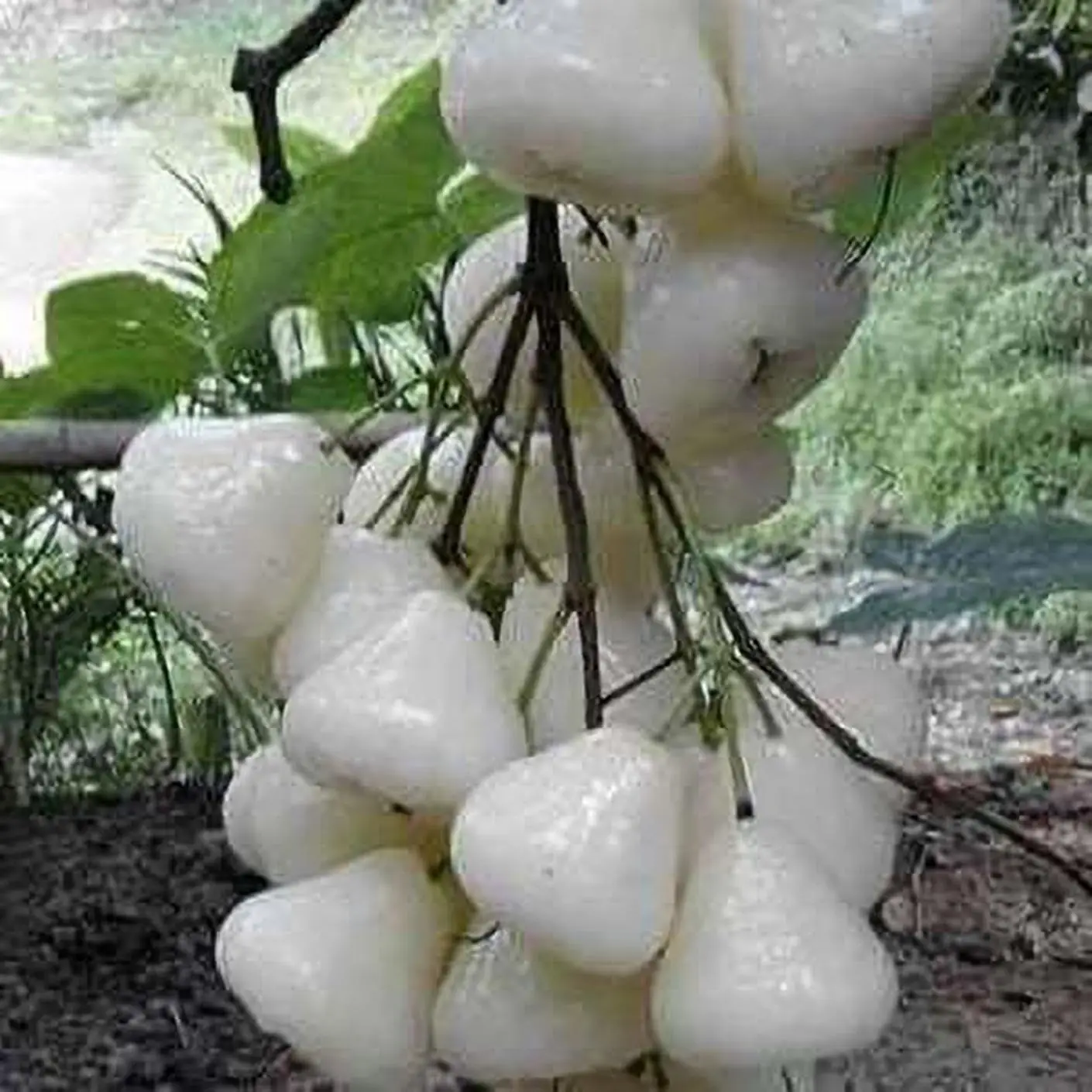
I am the White Jamun, the ethereal ghost of the monsoon orchard. My stately evergreen tree, with its glossy, leathery leaves, bears delicate clusters of oval fruits that shimmer like pearls or pale jade. My skin is thin and waxy, encasing crisp, juicy flesh with a subtly sweet, mildly astringent flavor and the faint, refreshing aroma of rose apples—a rare and elegant delicacy.
I am a specific, less common variety of the Java Plum (Syzygium cumini), characterized by its greenish-white to ivory-colored fruit. I am prized for my unique appearance, refreshing taste, and slightly lower astringency compared to the common purple Jamun.
Native to the Indian subcontinent and Southeast Asia. The white-fruited variety is cultivated in gardens and orchards, particularly in India, Sri Lanka, and Thailand, and is often found as a cultivated oddity.
Requires regular watering when young to establish a deep taproot. Mature trees are quite drought-tolerant but produce better fruit with consistent moisture, especially during flowering and fruit development.
Prefers full sun to partial shade. Fruits best in full sun, which helps develop its characteristic mild sweetness.
Thrives in tropical to subtropical climates (20-35°C). Can tolerate light frosts once established but prefers consistent warmth.
Plant in deep, well-drained, loamy soil. Due to its potential large size, it needs ample space. Can be grown from seed, but grafting ensures the white fruit trait. Often planted as a shade and fruit tree in large gardens.
Benefits from an annual application of compost or a balanced organic fertilizer in the spring. Not a heavy feeder.
Botanical name: Syzygium cumini (alba or white-fruited variety); Common names: White Java Plum, Safed Jamun, Paal Jamun, Vella Naval (Malayalam); Family: Myrtaceae.
The ripe fruit flesh is generally considered non-toxic in small amounts. However, the seeds are not meant for consumption. As with any unfamiliar fruit, moderation and supervision with pets are advised.
High. As a large, dense evergreen tree, it is excellent for oxygen production, carbon sequestration, and providing significant cooling shade.
Fruits are a unique, less staining alternative to purple Jamun, with a milder flavor; rich in vitamins and antioxidants; the tree provides excellent shade and is highly attractive; wood is valuable; flowers are a good source of nectar for bees.
Birds and bats are highly attracted to the ripe fruit. Can be susceptible to sooty mold from aphid secretions and fungal leaf spots in humid conditions. Fruit yield can be variable.
Very long-lived perennial tree. Can live for over 100 years, growing 10-15 meters tall or more, with a dense, rounded canopy.
Everyday 8:30AM to 6:30PM

Akola, Road, Badnera, Amravati, Maharashtra 444701